Spring Landscape Cleanup in Stamford, CT: Your Complete April Checklist

Davida Landscape Designs • April 25, 2026

After a long, wet Connecticut winter, every homeowner in Fairfield County feels the same itch the moment the first warm weekend hits — grab a rake, dust off the lawnmower, and start the spring cleanup. But here's something most Stamford landscaping guides won't tell you: starting too early is one of the most common and costly spring landscaping mistakes we see . We've spent 20+ years restoring Stamford properties in April, and the single biggest lesson is this: timing matters more than effort.

At Davida Landscape Designs, we work with established residential landscapes across Stamford, Darien, Greenwich, New Canaan, and the rest of lower Fairfield County. This guide walks you through exactly what your property needs after a Connecticut winter, when to actually start each task , and the mistakes that cost homeowners thousands in lawn and plant damage every spring.

1. Wait for Soil Temperatures to Hit 50°F (Usually Mid-April)

Here's the single biggest mistake we see homeowners make every single year: starting spring cleanup on the first 60-degree weekend in March. The grass looks ready. The sun is out. Your neighbor is already out there raking. So you grab your equipment and get to work — and you just damaged your lawn for the next two months.

The rule we follow at Davida is simple: we wait until soil temperatures consistently reach 50°F . In Stamford, that typically lands between April 10 and April 20, depending on the year. Air temperature is not soil temperature. The ground stays frost-dormant long after your patio feels warm enough for coffee outside.

Why does this matter so much? When you walk on frost-dormant lawn or start aggressive raking, you compact soil and shear off delicate new root growth that's just beginning to develop. The damage is invisible for about three weeks — then suddenly you have bare patches, uneven color, and weak areas the whole summer. We've been called in to repair more "I started too early" lawns than we can count.

A cheap soil thermometer from any hardware store costs about $10 and will save you hundreds in repair costs. Stick it four inches into your lawn, check it on a sunny morning, and wait for three consecutive days of 50°F readings before anything heavy gets done.

2. Walk the Property Before You Touch a Single Tool

Before any cleanup starts, we do a full property walkthrough. This is exactly the kind of assessment we run during a landscape design consultation , and it's something every homeowner should do on their own property each spring.

Look for winter damage first: branches broken by snow load, sections of lawn where the snowplow or salt pushed back, perennial beds where voles or moles tunneled under the snow, and any hardscaping that shifted from frost heave. Stone walkways, patio pavers, and retaining walls in particular can move significantly during a harsh Connecticut winter.

Check your drainage next. Walk the property after a rainstorm and note where water pools, runs off, or pushes mulch out of beds. Spring is the ideal moment to fix drainage issues, because by June the ground will be dry enough that problems become invisible — only to resurface next spring with more damage.

Finally, inventory your plants. Evergreens might have winter burn on the windward side. Perennials that looked dead might actually be pushing new growth at the crown. Shrubs might need a hard pruning or light shaping depending on type. Note what needs attention before you buy anything at the garden center — homeowners routinely over-purchase plants they don't need because they haven't walked the property first.

3. The Right Order of Operations for Spring Cleanup

When timing is right and you've assessed the property, here's the sequence we follow on every job. Order matters — doing these out of sequence creates twice the work.

First, debris removal. Clear every leaf, branch, and pine needle from lawn areas and planting beds. Leaves that sat on the lawn all winter suffocate new grass growth, and wet debris in beds creates the perfect environment for fungal disease. Use a gentle rake on turf — aggressive metal rakes tear out healthy crowns along with the debris.

Second, bed edging. Cut clean, crisp edges on every planting bed before adding any mulch. This single step makes a property look professionally maintained more than anything else you can do. A sharp edge with a 4-inch mulch layer reads "designed" even when nothing is blooming yet.

Third, pruning. Remove dead wood from shrubs, cut back ornamental grasses to 4–6 inches, and deadhead any perennials you left standing for winter interest. Do not prune spring-flowering shrubs like lilacs, forsythia, or azaleas yet — they set buds on last year's growth, and pruning now means no flowers. Wait until after they bloom.

Fourth, pre-emergent weed control. This is the spring window that closes faster than anything else. Crabgrass pre-emergent only works if it goes down before soil temperatures hit 55°F — which in Stamford is usually the last week of April. Miss this window and you're fighting crabgrass all summer with no option but post-emergent treatments that damage surrounding grass.

Fifth, fresh mulch. Two to three inches is the right depth — any more and you suffocate roots, any less and you don't get the weed suppression or moisture retention benefits. Never pile mulch against tree trunks. "Mulch volcanoes" are one of the most damaging practices we see on Fairfield County properties.

4. Real Example: A Full Spring Restoration in Darien

Last week we finished a full spring restoration on a one-acre property in Darien. The owners had tried to handle spring cleanup themselves for two years and were tired of the unevenness — patchy lawn, beds that looked okay for a week then exploded with weeds by June, mulch that washed out during storms.

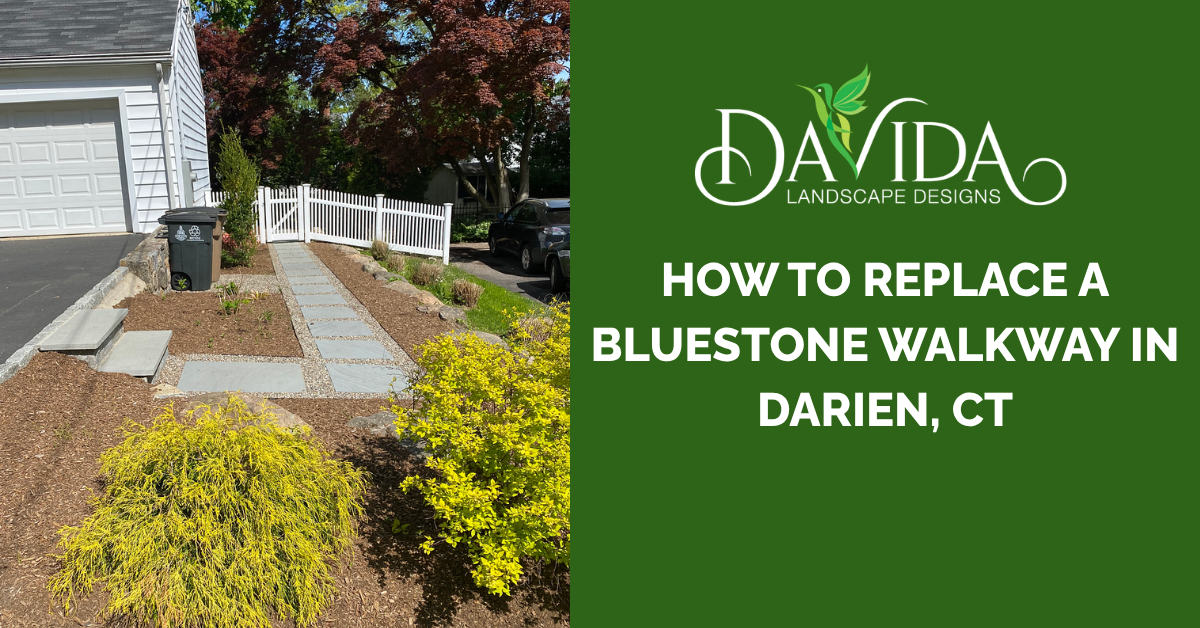
Our four-person crew spent two full days on the property. Day one was debris removal, aggressive but careful dethatching, a complete walk of every bed to assess plant health, and cutting fresh edges on 400+ linear feet of bed borders. We also addressed three areas of winter damage to their bluestone walkway where frost heave had lifted two pavers.

Day two was the agronomic work: granular crabgrass pre-emergent across the entire lawn, targeted pruning on winter-damaged shrubs, deadheading and shaping the ornamental grasses, and 18 cubic yards of hardwood mulch installed at a consistent 2.5-inch depth. We finished with a slow-release organic fertilizer calibrated to their soil's nitrogen levels from a test we pulled in late March.

The property went from looking "worked on" to looking professionally designed in 48 hours. More importantly, the work sets up the rest of the season — with proper pre-emergent timing and mulch depth, their weed pressure will be 70% lower than the previous two years, and their lawn will establish deep roots before summer heat stress arrives in July.

5. What Your Spring Cleanup Checklist Should Cover

If you're doing it yourself this year, here's the condensed April checklist we'd hand any Stamford homeowner with an established landscape:

  • Week 1 (early April): Property walkthrough only. Check soil temps. Inventory plants, drainage, winter damage.
  • Week 2–3 (mid-April, after soil hits 50°F): Debris cleanup, bed edging, pruning of summer-flowering shrubs only.
  • Week 3–4 (before soil hits 55°F): Crabgrass pre-emergent application — do not miss this window.
  • Late April: Fresh mulch at 2–3 inches, slow-release fertilizer, first deep watering if rainfall has been light.
  • Throughout: Hold off on spring-flowering shrub pruning until after bloom. Hold off on mowing until grass is actively growing — typically late April or early May in Fairfield County.

Every property is different. Waterfront properties in Rowayton have different salt and wind considerations. Wooded lots in Weston need different drainage strategies. And established perennial gardens in Greenwich need targeted care that blanket-approach cleanups will damage. If your property has mature plantings or complex hardscaping, a professional eye on the first cleanup of the year prevents expensive mistakes.

6. Our Seasonal Maintenance Contract for Fairfield County Homeowners

For homeowners who want the property handled right without thinking about it, we offer a seasonal maintenance contract that covers spring cleanup, summer bed maintenance, fall cleanup, and winter prep. One contract, one team, one phone number — your property gets consistent care from people who know its specific quirks.

The contract model works especially well for properties with mature landscapes, complex planting beds, or hardscape elements like bluestone walkways, retaining walls, and stone features. These properties lose significant value fast when maintenance is inconsistent, and gain value fast when they're cared for by a team that returns every few weeks.

We're currently booking April and May appointments. Spring is our busiest season, and the homeowners who call early get the best scheduling. If you want your property restored properly this spring — at the right time, in the right order, without the damage that comes from starting too early — we'd love to walk your property with you.

Book a Spring Consultation Before May

Spring restoration is our specialty, and we only take on the number of properties our team can service properly. Our schedule for April and early May fills quickly — if you want Davida Landscape Designs handling your Stamford, Darien, Greenwich, or New Canaan property this season, book a consultation now. We'll walk your property, identify exactly what it needs, and give you a clear plan for both this spring and the full year ahead.

Your landscape is one of the biggest investments on your property. Don't let an early-spring weekend of good intentions set it back for the rest of the year.

Four people relax on outdoor furniture around a stone fire pit in a lush, green backyard. Logo reads Davida Landscape Design.
By Davida Landscape Designs March 23, 2026
Learn how to design a functional backyard with patios, fire pits, and outdoor living spaces in Connecticut.

A large house with a manicured green lawn, beside text titled
By Davida Landscape Designs March 23, 2026
Discover which landscaping upgrades increase home value in Connecticut, including patios, outdoor living spaces, and gardens.

A landscape design ad featuring a house with autumn foliage, with the text:
By Davida Landscape Designs March 23, 2026
Learn what to keep, remove, or redesign when upgrading your yard in Connecticut.

Autumn woods on the left next to text reading
By Davida Landscape Designs March 23, 2026
Discover how Connecticut weather impacts landscaping design and plant choices.
A garden path with autumnal flowers and a raised wooden planter next to text:
By Davida Landscape Designs March 23, 2026
Learn how to balance patios, walkways, and greenery for a natural landscape.
A gravel driveway leads to a large home, with text on a green background asking how to design a low-maintenance landscape.
By Davida Landscape Designs March 23, 2026
Learn how to create a low-maintenance landscape that stays beautiful year-round in Connecticut.
A gravel backyard with a stone fire pit area, alongside text about creating privacy without installing a fence.
By Davida Landscape Designs March 23, 2026
Discover natural landscaping solutions for backyard privacy without using fences.
A backyard patio with outdoor furniture next to a green panel with the title
By Davida Landscape Designs March 23, 2026
Learn how to budget and plan your backyard renovation in Connecticut with expert guidance.
Four men in green shirts and khakis stand beside two white trucks; the logo reads
By Davida Landscape Designs March 6, 2026
Learn the difference between a landscape designer and a landscaper, and when homeowners should hire a professional for outdoor planning and installation.
Aerial view of a house with landscaping, green text:
By Davida Landscape Designs March 6, 2026
Learn what happens during a landscape design consultation, how to prepare for the meeting, and what steps follow before your outdoor project begins.
Show More